

Prepper's Guide to Solar: Building a System That Works When Everything Else Doesn't

TL;DR: A gas generator needs fuel, makes noise, and runs out. A well-built solar system runs on sunlight — indefinitely, silently, and without announcing itself to the neighborhood. For serious grid-down preparedness, solar-plus-storage isn't a nice-to-have. It's the only power solution that keeps working as long as the sun rises. Here's what a real prepper-grade setup looks like, what to protect it from, and how to size it right.
We hear from a lot of people who've thought seriously about what happens when the grid goes down for a week. Not a storm overnight — a week. Maybe longer. They've got food storage, water filtration, medical supplies dialed in. And then they look at their power situation and realize it's the one thing they haven't actually solved.
A gas generator is better than nothing. But it needs fuel, it makes noise, and it announces to the neighborhood that you have power when they don't. For anyone who's worked through a real grid-down scenario, those are real problems.
Solar is different. It runs on sunlight. No noise. No exhaust. No fuel runs. And built right, it keeps running indefinitely — refilling itself from the sun every day without you lifting a finger.
This is the guide for people who want to build that system.
What Makes a Solar System Actually Prepper-Grade?
Not every solar setup is built for serious grid-down scenarios. Four things separate a preparedness system from a bill-reduction system.
It has to be off-grid capable. Standard grid-tied systems shut off automatically when the grid goes down — a safety feature that protects utility workers on the lines. That's fine for normal life, but it means a grid-tied-only system is useless during exactly the scenario you're planning for. Your system needs to operate completely independently.
It needs real battery storage. Panels produce power during daylight. Without storage, that power disappears at night. For serious grid-down resilience, you want enough battery to run essential loads for at least 2-3 days without any solar input — covering cloudy stretches, winter conditions, or times when you need to stay dark and quiet.
It has to produce indefinitely. A generator runs until the fuel runs out. Solar panels produce power every day the sun rises for 25+ years. That's the actual difference between a 72-hour solution and a permanent one.
Generator integration helps. For true worst-case resilience, a hybrid inverter that can accept generator input as a backup gives you a fallback during extended low-sun periods. Some systems manage this automatically, running the generator only when the battery drops below a set threshold.
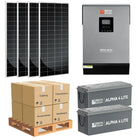
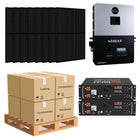
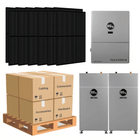
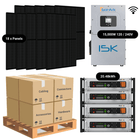
Which Kit Is Right for Serious Preparedness?
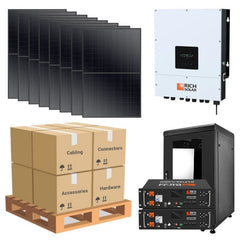
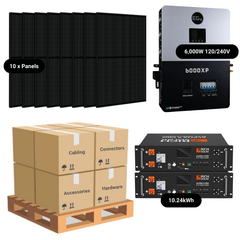
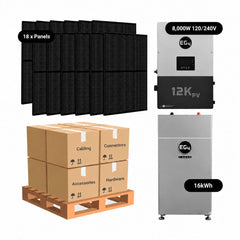
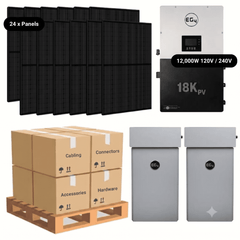
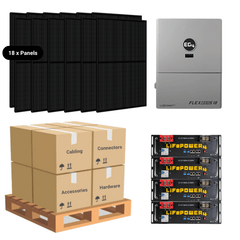
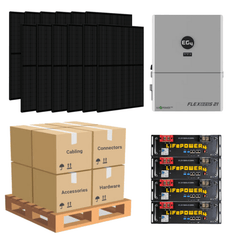
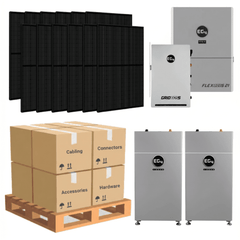
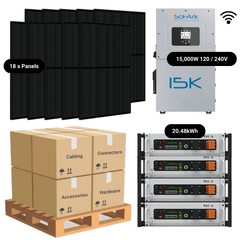
For most preppers, PRIME or ELITE kits are the right starting point. Here's the honest breakdown.
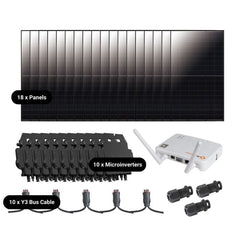
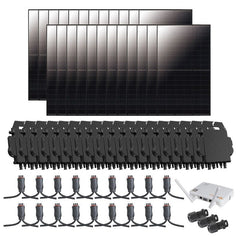
CORE kits are excellent for remote outbuildings, cabins, and small off-grid applications. But they're limited in total output and battery capacity — not the right architecture for whole-home preparedness.
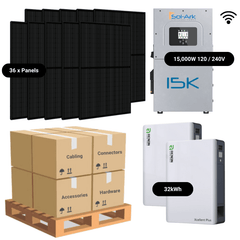
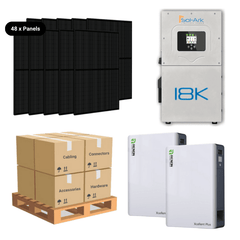
PRIME kits hit the sweet spot. Built for whole-home loads, fully off-grid capable, and optionally grid-interactive when you choose. The PRIME Pro with 28-32kWh of lithium battery storage gives you the multi-day autonomy that serious preparedness calls for.
ELITE kits go further. The Sol-Ark inverters at the heart of ELITE are specifically designed for 24/7 off-grid use in demanding environments. They manage generator integration automatically — when the battery drops below your set threshold, the system brings the generator online and keeps the battery topped off without any intervention. For whole-home preparedness with no compromises, ELITE is the answer.
How Much Battery Storage Do You Actually Need?
A common target for preparedness is 2-3 days of autonomy — meaning enough battery storage to run your essential loads for 2-3 days without any solar input. Essential loads in a managed grid-down scenario typically run 5-15 kWh per day: refrigerator, freezer, lighting, water pump, medical equipment, communication devices.
At 10 kWh/day and a 3-day target, you need 30 kWh of usable storage. Accounting for lithium's 80% depth of discharge, that means roughly 37.5 kWh of total rated capacity — which is why the PRIME Pro and ELITE configurations in the 28-32kWh range exist.
One thing most people miss: during a daylight outage when the sun is shining, your panels are recharging the battery while you're drawing from it. A 7.92kW system on a good day produces 30-40kWh. If you're consuming 10kWh, you're net positive. Days of autonomy is the worst-case number. In practice, a sunny outage scenario is considerably more comfortable than the numbers suggest.
Where autonomy really matters: extended cloudy periods, winter months with short days, or northern climates where December solar production drops significantly. If you're in the northern US or Canada and want year-round resilience, size for January, not August. Use ShopSolar's free Solar Calculators to run the numbers for your location.
EMP Protection: What It Is and What's Actually Worth Doing
An EMP — electromagnetic pulse — is a burst of electromagnetic energy that can induce damaging voltage surges in electronics. Natural sources include solar flares and geomagnetic storms. The 1989 Quebec blackout was caused by a geomagnetic event. The Carrington Event of 1859, if it happened today, would be catastrophic for modern electrical infrastructure.
Man-made EMPs from high-altitude nuclear detonation are a documented strategic concern — significant enough that the US issued an executive order on EMP preparedness and Homeland Security has named it a major infrastructure threat.
Your solar panels are relatively resilient — they're simple semiconductor devices. Your inverter, charge controller, and battery management system are the vulnerable parts. Replacement cost for an inverter alone runs $1,000-$5,000+.
Two layers of protection worth having:
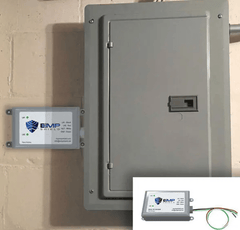
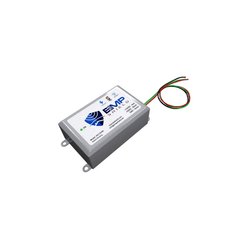
Hardwired protection. The EMP Shield for Home detects overvoltage surges — including lightning, which is a far more common threat — and shunts them away from your connected electronics in less than one billionth of a second. Tested at the Keystone compliance facility, a federally approved testing center. Protects everything connected to your home's electrical system.
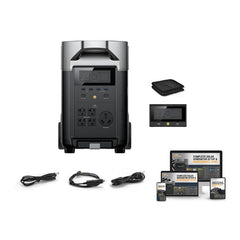
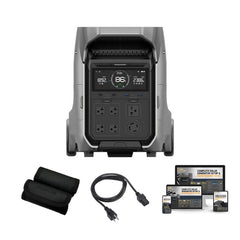
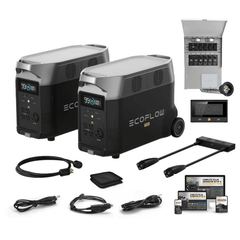
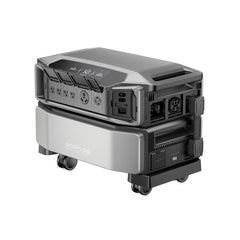
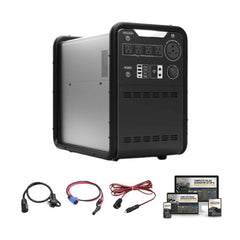
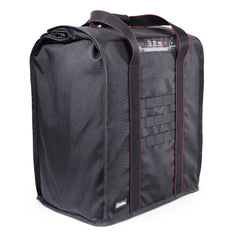
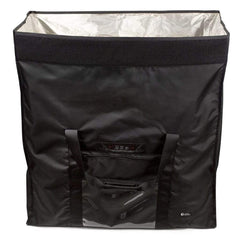
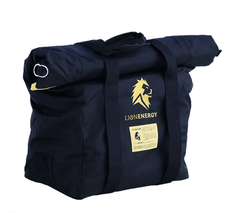
Faraday storage. A Faraday bag blocks electromagnetic fields entirely. Electronics sealed inside are completely isolated from external events. ShopSolar's Faraday bags are certified to MIL STD 188-125 — the military standard for electromagnetic shielding. The large generator-sized bags fit portable power stations like EcoFlow Delta units and most compact generators.
Practical approach: hardwired EMP Shield for your installed system, Faraday bags for spare components and critical portables. Spare charge controller, backup communication gear, a solar generator like an EcoFlow or Anker unit — sealed and stored. Even if your primary system takes a hit, you have functioning backup equipment ready to go.
Generator Integration: Your Fallback for Extended Low-Sun Periods
For true resilience across extended cloudy periods or winter months, integrating a backup generator is the belt-and-suspenders approach.
Modern hybrid inverters — specifically the Sol-Ark units in ELITE kits — manage this automatically. They monitor battery state of charge, and when it drops below your set threshold, they bring the generator online and run it until the battery is topped off. When solar takes over again, the generator shuts down. You set the parameters once. The system handles the rest.
Propane is often the preferred generator fuel for preparedness setups — it stores indefinitely without degradation, unlike gasoline which degrades in months. A proper propane setup with a well-sized generator means you might run it only a handful of times all winter, with solar carrying the load the rest of the year.
The Bottom Line for Preparedness Buyers
A system that sits in the sun, charges silently, and keeps your household running through whatever happens — that's what serious preparedness looks like on the power side. No fuel logistics, no noise discipline problems, no running out at the wrong moment.
The PRIME Pro and ELITE line are where most serious preparedness builds end up. Add EMP protection and a Faraday-stored backup, and you've got a layered system that covers scenarios most people haven't even thought through.
Get a free proposal and let our team help you size it for your actual situation — loads, location, and how many days you want to sleep well.
Frequently Asked Questions
What solar system is best for emergency preparedness? A system that can operate completely off-grid is the minimum requirement — grid-tied-only systems shut off during outages as a safety measure. For serious whole-home preparedness, the PRIME and ELITE kit lines are the right starting point. Both are off-grid capable with substantial battery storage. ELITE kits with Sol-Ark inverters add automatic generator integration, which is valuable for extended low-sun periods. See ShopSolar's PRIME and ELITE collections for current configurations.
Do solar panels work during a power outage? Standard grid-tied panels do not — they shut off automatically when the grid goes down. A solar system with battery storage and an off-grid-capable inverter creates an independent microgrid that operates regardless of what's happening on the utility grid. This is why off-grid capable systems like PRIME and ELITE are the right choice for preparedness applications, not standard grid-tied setups.
Does EMP protection for solar actually work? Yes, for the types of electromagnetic threats it's designed to address. Hardwired EMP shields like the EMP Shield for Home shunt overvoltage surges in less than one billionth of a second, protecting connected electronics from lightning and electromagnetic pulse. Faraday bags certified to MIL STD 188-125 provide complete electromagnetic isolation for electronics stored inside them. Neither is a guarantee against every possible scenario, but both significantly improve resilience against documented electromagnetic threats.
How many days of battery backup do I need for emergencies? 2-3 days of autonomy is the practical starting point for most households — enough to handle common outage scenarios while accounting for whatever solar production occurs during the outage. If you're in a high-outage area, use medical equipment, or want to plan for extended winter low-sun periods, push toward 4-5 days. ShopSolar's Solar Calculators can help you size this based on your actual essential loads.
Can I integrate a generator with my solar system? Yes. Hybrid inverters like those in ShopSolar's ELITE line (Sol-Ark) manage generator integration automatically — the system monitors battery state and runs the generator when needed, then returns to solar when conditions improve. This provides a true fallback for extended low-sun periods without manual intervention. Propane is generally the preferred generator fuel for preparedness applications because it stores indefinitely without degradation.
This article is for informational purposes only. System performance varies based on location, usage, installation quality, and local conditions. EMP protection effectiveness depends on the type and intensity of the electromagnetic event. Consult a qualified solar professional for advice specific to your installation.