System Sizing & Design
Q: How do I determine what size of solar kit I need?
A: The fastest way is to start with what you're trying to power. Are you interested in emergency backup, off-grid living, or just offsetting your utility bill? From there, figure out how many watt-hours (Wh) or kilowatt-hours (kWh) you need per hour and then per day. Our solar calculators can help you do all of that. And if you’re still unsure, or just want us to help you - just tell us what you'd like to run, and we'll size the system for you, no guesswork required and we can work within all budgets.
Q: Can I power my entire house on solar?
A: Yes, but it is dependent on how much power your home uses and whether you (or your budget) want to go fully off-grid or just reduce your reliance on the grid. Whole-home systems are totally doable and we help people do this every day. Just keep in mind: the bigger the home and heavier the loads, like HVAC, well pumps, etc., the more panels and batteries you'll need.
Q: What's the difference between off-grid, grid-tied, and hybrid solar systems?
A:
- Off-grid means no utility company connection whatsoever; you're 100% self-powered, with solar and a battery system to store energy. And maybe some wind or gas powered generators as backup.
- Grid-tied means the system is connected to feed power back into the grid (to your utility company) on a some sort of sell-back contract / agreement.
-
Hybrid means the system combines the two: you stay connected to the grid but also have battery backup, so you're covered if the power goes out.
Q: How do I know if my roof or property is suitable?
A: Most roofs are just fine, so the question is more about access to direct sunlight, with minimal shade from big trees and space for panels. If your roof isn't perfect, there's always ground mounting. Just give us your address, and we'll check it out.
Q: Do I need batteries if I'm just trying to reduce my power bill?
A: Not necessarily, as long as you are grid-tied and only want to reduce your monthly bill, then a grid-tied system will do just fine without batteries. But if you want backup power during outages or more independence, batteries are a smart add-on.
Q: Am I “connected to the grid” if I am only using AC power to re-charge my battery bank on cloudy days?
A: Technically no, this is not what is meant by grid-tied. What is meant by grid-tie is that you have some sort of “sell-back agreement” where you’re selling all or excess power back to your utility company for a certain price. Here’s an analogy we like to use - think of “grid-tie” as when you are dumping your water (power) into the utility company's river (the grid). Whereas when you are just drawing water (power) out of their river (the grid) to recharge your battery bank, this is no different than charging your cellphone or laptop at night. Your utility company doesn’t really care about this either since a) you’re paying for it and b) there’s no risk of “contamination” (sticking with our analogy from above). If this still does not make sense, feel free to reach out and we’d be happy to explain further.
Installation & Setup
Q: Can I install a solar kit myself?
A: Absolutely - many of our customers install their systems themselves. We have coined the term - DIY+, where you “do-it-yourself” plus lean on us for our support, expertise and guidance. As long as you're somewhat handy and comfortable working with basic tools, DIY solar is absolutely doable. We include wiring diagrams and resources to guide you step by step. That said, some parts (like connecting to your main panel or final inspection) might require a licensed electrician depending on local codes and the design of your particular system.
Q: What does being “your own general contractor” mean?
A: We see ourselves as the Home Depot for solar kits. A place where you can source all of the materials you need for any project, get expert advice and trust that the support will be there long-term. While you do not necessarily have to be the one doing the install. For example, buying all of the equipment and then hiring a local handyman to come in and do the install is what we refer to as acting like “your own general contractor”. You’re overseeing the project, managing timelines, keeping things organized etc. and by doing so, you should be able to save yourself thousands of dollars along the way.
Q: What tools will I need to install my solar system?
A: Nothing fancy really, most installs just need basic tools: a drill, wire cutters, wrenches, screwdrivers, and a multimeter. If you’re mounting panels on a roof, you may also need a ladder, roof anchors, and safety gear. Ground mounted solar systems may require a bit more heavy duty equipment, however even then most of our kits come with ground screw kits that you can twist into the ground with 1-3 people.
Q: Do your solar kits come with everything I need?
A: Yes - our solar kits are designed to be as turnkey and plug-and-play as possible. That means solar panels, inverters, batteries (if included), racking, cabling, connectors, fuses, and everything else needed to get up and running. If your setup has any unique needs (like a ground-mount or longer cable runs), and you’re working with one of our reps, we’ll get this all sorted for you as well.
Q: How long does installation take?
A: It depends on the size of the system and your experience level. A small off-grid kit might take a weekend, while a full home backup setup could take several days. If you’re hiring a contractor, most installs are wrapped up from start to finish within 1–3 business days. Either way, we’re here to support you before, during, and after install.
Permitting, Inspections & Compliance
Q: Do I need a permit to install a solar system?
A: In most cases, no. Not for fully off-grid, portable and small hybrid / backup systems that are not designed to sell back to the grid. However, if you're looking to connect to the grid in order to “sell back” excess power, then yes, you will absolutely need a permit. Off-grid setups in remote or rural areas do not typically require permits, but it's always best to check with your local building or electrical authority. Every region is different. Lastly - think of a fully off-grid, portable or small hybrid / backup solar power system as no different than having a gas powered generator in your home or on your property for power outages, camping, off-grid living etc.
Q: Will these solar kits pass inspection in my area?
A: Our kits use high quality components, most of which are UL-listed and NEC-compliant, and are approved in most jurisdictions across the U.S. and Canada. That said, local inspectors may have specific preferences or requirements, especially around UL certification levels, wiring, disconnects, or labels. We’ll help make sure your setup is as compliant as needed.
Q: Do you provide documentation for permitting?
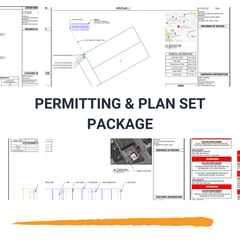
A: Yes. We can provide all of the necessary spec sheets, line diagrams, and other required documentation. For large or grid-tied systems, many customers choose to have us create custom single-line diagrams (SLDs) for permitting and inspection. We also offer a full permitting and plan set service if you are looking to connect into the grid.
Q: Can I connect your systems to the grid?
A: Yes - if you purchase a grid-tied or hybrid solar kit. You'll also need approval from your utility company before flipping the switch to sell power back. If your system is off-grid, it’s not meant to sell back to the grid and doesn't require utility company approval.
Q: Can I have an off-grid system if I live in town or the city
A: Yes - we call it the modern off-grid setup. Just like we mentioned before, installing a small off-grid solar power system in your home can be done in the same way you would use a fuel powered generator. You could set it up and then hook it to a critical load / aka “sub-panel” where the system powers a specific set of circuits either full-time or when the grid goes down.
Shipping, Lead Times & Delivery
Q: How long does shipping take?
A: Most orders leave our warehouse within 1–3 business days. Transit times depend on your location and what you ordered. LTL freight (for panels and batteries) usually takes 5–10 business days. Smaller items shipped via FedEx or UPS arrive faster. You’ll get tracking as soon as your order ships.
Q: Can I schedule a specific delivery time?
A: Freight carriers will call ahead to schedule a delivery window. It won’t be a specific hour, but you’ll have notice. For UPS or FedEx deliveries, you can track the shipment and sometimes adjust delivery through their portals, but exact times aren't guaranteed.
Q: Will everything arrive in one shipment?
A: We do our best. Solar kits often ship in multiple boxes along with a pallet of solar panels. Panels might come separately from inverters and batteries. This is normal - we do it to get things to you faster. Tracking info will show what’s arriving when.
Q: What do I do if something arrives damaged or missing?
A: Take photos before signing for any freight delivery — especially of the packaging and pallet. If something looks damaged, note it with the driver and take pictures. Then contact our support team with photos and your order number. We’ll get it sorted quickly.
Q: Where do you ship from, and do you ship to my state/province?
A: We ship across the U.S. and Canada. All of our orders ship from warehouses in the U.S. (mostly California & Texas,). Canadian orders ship from Canadian warehouses.
Q: How are large items like racking and panels shipped?
A: We have actually developed our own custom solar panel shipping system for safely and effectively shipping 100’s of 10-30 solar panel orders per month. Solar panels are shipped via LTL freight. These are curbside deliveries, meaning the truck drops it off at your driveway or closest flat surface. You’ll need to be home to sign for it, and we recommend having help to unload and move heavier items.
Shipping, Returns & Support Policies
Maintenance & Support
Q: What kind of maintenance is required?
A: Not much! Solar power systems are typically very low maintenance. For off-grid and hybrid setups, the main things to check are battery health, cable connections, and keeping your inverter and charge controller well-ventilated. A quick monthly visual inspection is usually enough. We have created a routine maintenance checklist for our customers to follow.
Q: Do solar panels need to be cleaned?
A: In most cases, no. If you live in a dry, dusty area or somewhere with lots of pollen or bird droppings, an occasional rinse with a hose can help keep performance up. No need for scrubbing or fancy cleaners - just a gentle clean once or twice a year if needed.
Q: Who do I contact if something breaks?
A: Start with us. Our support team is here to help troubleshoot, replace parts, or guide you through warranty claims. Just call or email us with your order number and photos or details of the issue. We’ve helped thousands of customers get back up and running quickly.
Q: What’s covered under warranty?
A: Each component comes with its own manufacturer’s warranty. Solar panels usually have 25+ year output guarantees, inverters and charge controllers often have 5–10 year warranties, and batteries typically range from 3–15 years depending on the brand. We’re happy to walk you through the fine print if needed.
Monitoring, Connectivity & Features
Q: Can I monitor my system remotely?
A: Yes - many of our systems include built-in or optional monitoring features and apps that let you track performance in real-time from your phone, tablet, or computer. You can view solar production, battery charge levels, and power usage stats right from your device.
Q: Is WiFi required?
A: Not always. Some systems require WiFi for full remote monitoring and firmware updates, while others can log data locally to an SD card or display info directly on the inverter. If you’re in a remote area without an internet connection, ask us about systems with offline monitoring options.
Q: Do I need a smartphone or app to operate this?
A: Nope. While apps make it easier to monitor and adjust settings, many kits work completely fine without them. You can control most functions using the inverter screen or control panel — no smartphone required.
Q: How do I update firmware/software?
A: Some inverters and charge controllers update automatically if connected to WiFi. Others may require you to download firmware from the manufacturer’s site and update via USB or SD card. We’ll help walk you through the process if needed.
Batteries, Charging & Performance
Q: How long will my batteries last?
A: It depends on the type of battery, how much and frequently it’s discharged, and how well it’s maintained. Most lithium batteries are rated for 3,000 to 6,000 cycles - that’s 10+ years with regular use. Lead-acid batteries typically last 3–5 years. We always say batteries are like humans, to maximize longevity - keep them in a stable temperature environment and avoid draining them to zero.
Q: Can I expand my battery bank later?
A: Yes - most of our solar kits are designed to be fully expandable. If you think you’ll need more storage in the future, just make sure you start with an inverter and/or charge controller that can handle the extra capacity. We can also help you plan for that upfront to make scaling even easier.
Q: Will my system work during a power outage?
A: This depends mostly on how your system is installed and if your system includes batteries, which 99% of the systems we sell include. All off-grid and hybrid solar kits are designed to keep essential appliances running during blackouts or for full-time living if you’re totally off the grid. If you’re grid-tied without batteries, though, your system will shut off for safety and you’ll lose power just like everyone else. Batteries = true energy independence.
Q: How do I prevent my batteries from overcharging or discharging?
A: Luckily technology takes care of that for the most part now. All of our kits come with inverter/chargers that automatically regulate the charging process to prevent overcharging or damaging the batteries. You just need to make sure everything’s sized correctly, installed properly and commissioned to the right settings - and we’ve got your back on all three.
Climate & Location-Specific Concerns
Q: Will solar work in cold or snowy climates?
A: Absolutely. Funny enough, solar panels actually operate more efficiently in cooler temperatures. Snow can temporarily reduce output if it completely covers the panels, but even then, light still penetrates thin layers. Plus solar panels are often mounted at angles that help snow slide off. Many customers across Canada, Alaska, and the northern U.S. run solar systems year-round with no issues.
Q: Do I need different equipment for Florida vs. Arizona?
A: Not necessarily. Both sunny states are excellent for solar. However, in humid or coastal areas like Florida, we may recommend corrosion-resistant hardware or enclosures. In Arizona, where it’s hotter, proper ventilation and temperature tolerance for inverters and batteries become more important. We’ll help you get the right fit for your climate.
Q: Can I install solar on a mobile trailer or RV?
A: Yes - many of our solar kits are designed for mobile applications. We offer lightweight panels, compact lithium batteries, and charge controllers perfect for RVs, trailers, campervans, and mobile tiny homes. These setups are portable, efficient, and easy to use on the go.
Q: Will this system handle hurricane-prone areas?
A: If you're in a hurricane zone, we recommend systems with heavy-duty racking and secure mounting hardware or going with something more portable that you can keep inside until it is needed. While no system is 100% storm-proof, proper installation and prep (like stowing panels or using tilt brackets) can go a long way. We’ve helped plenty of customers in Florida, the Gulf Coast, and Caribbean prepare their setups for hurricane seasons.
Learning & Decision Support
Q: Is there a beginner’s guide to getting started?
A: Yes! We’ve put together simple step-by-step guides, videos, and FAQs to help you understand how solar works and how to get started - even if you’ve never touched a wire in your life. You’ll find everything from basic system overviews to detailed walkthroughs inside our DIY Solar Learning Center. We also created a comprehensive 60-minute DIY solar mini course which you can see here.
Q: Can I talk to someone before ordering?
A: Of course. Our team of off-grid and backup solar power experts is here to help you choose the right system. Whether you need help sizing a kit or figuring out installation, just reach out via email, phone, or live chat - no pressure, no pushy sales tactics, just real honest advice and support.
Q: What’s the best system for backup power?
A: That depends on your needs. If you're looking to keep essentials like your fridge, lights, and devices running during outages, we recommend a small hybrid or solar generator kit. For whole-home backup, a larger hybrid system with battery storage and solar charging may be the better fit. We are solar + battery experts and would be happy to help you decide.
Q: Do I need to understand electricity to install this?
A: Not at all. Most of our kits are pre-wired and designed for easy plug-and-play installations. If you can connect color-coded wires and follow instructions, you're probably good to go. For larger or grid-tied systems, we recommend hiring a licensed electrician to help - but many customers do the bulk of the work themselves.
Financing, Rebates & Incentives
Q: Do you offer financing?
A: Yes - we partner with several financing providers that allow you to pay over time instead of up‑front. During checkout you’ll see financing options, or you can contact our team ahead of purchase and we’ll walk you through the best plan for your credit and goals.
Q: Can I use the 30% federal solar tax credit?
A: Yes - if you meet the eligibility requirements. In many cases you can claim a tax credit worth 30% of your qualified solar system costs through the U.S. Federal Residential Clean Energy Credit. None of the systems we sell are leased, and it needs to be installed at your U.S. residence. We always recommend talking to your tax advisor to confirm your personal eligibility.
Q: How do I claim the solar tax credit?
A: You’ll file IRS Form 5695 with your federal tax return in the year your system is “placed in service.” Keep your receipts, installation records, and documentation - you may need these if your return is audited. If you don’t owe enough tax to use the full credit in one year, you can carry forward the unused portion to future years. For more details on the solar tax credit, check out our complete guide here - Solar Tax Credit Guide
Q: Is DIY solar eligible for state/local incentives?
A: Yes - in many cases. Eligibility depends on your state, utility, and the exact program. Some local incentives require licensed installation or specific equipment certifications; others are more flexible and apply to DIY solar systems too. Check your state’s energy or utility website, or ask us and we’ll help you research applicable incentives in your area.
Product Comparisons & Brand Differences
Q: What’s the difference between EcoFlow & Anker vs Sol‑Ark & EG4?
A: Good question, and here’s the high‑level gist: Some brands focus on user‑friendly, portable or light-weight setups (EcoFlow, Anker) while others lean into heavy‑duty, expandable systems for serious setups (Sol‑Ark, EG4). So pick what matches your goals: lightweight & plug‑in vs. full‑size system.
Q: Should I get a 120 V system or a split‑phase 240 V?
A: If you’re in a standard U.S. home with heavy loads (HVAC, well pump, large shop), a 240V split‑phase system is the better choice - it gives more power headroom and is more future‑proof. A 120V system can be perfect for smaller homes, cabins or RVs. If you’re unsure, talk to us about your appliance list and we’ll help you pick.
Q: What’s better: lithium or lead‑acid batteries?
A: Lithium batteries cost more upfront but last much longer (often 10+ years) and handle deeper discharges. Lead‑acid is cheaper, but shorter lifespan (3‑5 years) and needs more maintenance. If you’re building for energy independence or long‑term backup, lithium is the smarter play. If it’s a short‑term solution and budget‑tight, lead‑acid still works. The one area lead-acid batteries still win is in colder climates and for starting engines.
Q: What’s the difference between a pre‑built kit and a custom system?
A: A pre‑built kit is plug‑and‑play: panels, inverter, batteries all sized together - fast installation and lower risk. A custom system is tailored: we pick components, sizing, advanced layouts and long‑term expandability. If you have unique needs (off‑grid cabin, large home, unusual roof), then cust
Installers & Contractor Support
Q: Do you offer professional installation?
A: Yes - if you prefer a hands-off approach, we can connect you with trusted installation partners. We work with electricians and solar installers who understand our kits and can handle everything from permit‑pulling to final hookup. Just ask and we’ll make the intro or check out our installer network.
Q: Can I hire a local electrician to help?
A: Absolutely. Most of our kits are designed so you can do the bulk of the work and bring in a licensed electrician for the final connection or inspection. Just be sure to share the kit specs and wiring diagram with them so they know what they’re working with.
Q: Can you connect me with someone near me?
A: Yes - we maintain a network of installers across the U.S. If you tell us your ZIP code, we will do our best to recommend someone in your area who knows our systems and codes.
Q: Will my electrician understand how to install this?
A: In most cases, yes - especially if you give them the kit’s spec sheet and wiring diagram we provide. That said, solar and battery systems use a mix of DC and AC wiring and may have special requirements (rapid shutdown, interconnect paperwork, etc.). If your electrician hasn’t done solar recently, we’re happy to provide additional documentation or answer their questions to make the job smoother. However, depending on the scope of the job, we find that these installations are quite simple for a master electrician.
Sustainability, Preparedness & Energy Independence
Q: Can I go completely off‑grid with your kits?
A: Yes - if you size your system accordingly. A true off‑grid setup means no connection to the utility company, and relies fully on solar panels + batteries (and sometimes a fuel powered generator or some wind) to cover all of your usage. If you’re after that level of independence, we’ll help you design a solar power system that is fully ready to support your off-grid dreams.
Q: Will solar power protect me in an emergency?
A: Absolutely. Solar + battery backup gives you standby power when outages hit - whether it’s a storm, utility failure, or remote situation. While no system is “unbreakable,” being partially or fully self‑powered means you’re prepared instead of helpless - “By failing to prepare, your preparing to fail.”
Q: How long do solar panels last?
A: Modern solar panels are designed for about 25‑30 years of useful service, often longer if quality installation and climate allow. After that, they’ll still produce power, but at a lower rate. You can easily expect decades of clean, reliable performance.
Q: Can solar really save me money?
A: Yes - when sized correctly, placed in a good location, and installed well, solar power systems can definitely reduce or eliminate utility bills, and often pay for themselves in 8‑12 years (or even fewer in high‑rate areas). After the payback period, the power you generate is basically “free”. On top of this though, if done correctly, solar provides you and your family with total energy independence. This means you are less exposed to both potential failures and any future rate hikes. So whether or not the math makes perfect payback sense now or not, most of our customers are investing in solar + battery to secure their energy independence.
Trust, Warranty & Authorized Dealer Status
Q: Are you an authorized dealer for the brands you sell?
A: Yes! We are an authorized dealer for every brand we carry - including Sol-Ark, EG4, EcoFlow, Bluetti, Anker, Rich Solar and many others. This means any purchase made through ShopSolar is backed by full manufacturer warranties, and we can offer direct support in the rare case something goes wrong. It also means we’re held to high standards by the brands themselves, ensuring legitimate, new-in-box, up-to-date inventory.
Q: Do I still get the warranty if I install the system myself?
A: Yes - as long as you follow the provided manuals and system guidelines, your warranty still applies. Some brands may require proof of proper installation (e.g., wiring photos or inverter settings), and our team is always available to help with that.
Q: What happens if a product fails under warranty?
A: We’ll help troubleshoot and act as your point of contact with the manufacturer to get a replacement sent quickly. Since we’re an authorized reseller, we can fast-track support cases that might otherwise get stuck in long wait times.
Orders, Returns & Cancellations
Q: Can I cancel or change my order after I place it?
A: If your order hasn’t shipped yet, we can usually make changes or cancel it at no cost - just reach out to us as soon as possible. Once it's been processed and sent out, changes aren’t guaranteed, but we’ll do our best to help.
Q: What’s your return policy?
A: You can return most unused, unopened products within 30 days of delivery. The product must be in its original packaging, and you may be responsible for return shipping depending on the situation. Some exclusions apply depending on the product or brand.
Q: What if I’m missing a component?
A: Let us know right away - this is rare, but it can happen. We’ll work quickly to verify and send out any missing parts at no extra cost.
Q: What’s your restocking fee?
A: A restocking fee of 10–20% may apply to returned items, depending on the product and condition. Custom kits, special orders, and opened/used items may have higher fees or be non-returnable. We do our best to keep restocking fees as low as possible and handle most situations on a case by case basis.
Shipping, Returns & Support Policies
Tech Support, Troubleshooting & Repairs
Q: What kind of technical support do I get after buying?
All ShopSolar customers get lifetime customer support. Whether you have a quick setup question or a long-term troubleshooting need, our in-house support team is here to help - even years after your purchase.
Q: Can you help me troubleshoot error codes or setup issues?
A: Absolutely. Just send us a quick message with your order #, some details, photos, or videos. Then we’ll walk you through the solution or escalate to the manufacturer if needed. Many issues are simple and can be fixed remotely by our team of solar + battery experts.
Q: What happens if my inverter or battery isn’t working?
A: We’ll help diagnose it first. If it’s covered under warranty, we’ll guide you through the replacement process. As a large, reputable authorized dealer, we can easily fast-track support requests directly with the manufacturer.
Q: How do I get replacement parts?
A: If something’s under warranty, we’ll help get parts sent at no cost. If it’s outside warranty, we’ll still help you source what you need and get it shipped out quickly.
Q: Do I need to ship defective products back?
A: Sometimes, yes. It depends on the brand and warranty policy. Most manufacturers require the faulty item to be returned before sending a replacement. We’ll let you know what’s required and help coordinate return shipping as quickly as possible since we understand that these systems are usually our customers' lifeline.
Inventory, Backorders & Substitutions
Q: Are all products in stock?
A: We strive to keep real‑time stock updates on our site, but due to the high demand for solar systems and frequent freight shipments, inventory may change quickly. If an item shows “Out of Stock,” you can email or chat with us and we’ll check availability or send an ETA.
Q: Will you substitute parts if something is unavailable?
A: Yes - in the rare case a component becomes unavailable, we may offer a functionally equivalent substitute. We’ll always notify you before shipment so you can approve the change. This helps avoid shipping delays. Substitution is a standard best practice to maintain order fulfillment.
Q: Can I reserve a kit or product by placing a backorder?
A: Absolutely. If you see that a kit or product is currently out of stock or shipping has a delay, you can reserve it by placing the order and paying a deposit (depending on terms). We’ll mark it as reserved, and we’ll ship it as soon as it arrives at our warehouse.
Commercial, Cabin & Off-Standard Use Cases
Q: Can I use this for a cabin, shop, or ADU?
A: Yes. Whether you're powering a remote cabin, detached shop, guesthouse, or ADU (accessory dwelling unit), our solar kits are perfect for off-grid, hybrid or backup setups. Choose the right voltage (120V or 240V), total wattage, and battery capacity based on your usage. If you're unsure, we’ll help size it properly.
Q: Can your solar kits power a business or commercial building?
A: Definitely - many of our customers use our larger kits for small businesses, farm buildings, or commercial shops. For anything above 10,000W or needing 3-phase power, reach out and we’ll help determine the right solution or if a custom build makes more sense.
Q: Do you offer solar kits for wells or pumps?
A: Yes, we have experience and solar kits perfect for helping customers power off-grid well pumps and pressure systems. You’ll need to know your pump's power draw and duty cycle. We can help recommend an appropriate inverter size and battery bank to handle starting surge and runtime.
Q: Is it safe to install solar near animals or livestock?
A: Yes, as long as everything is properly installed and grounded. We’ve seen plenty of solar setups on barns, coops, and livestock shelters. If the system is exposed to the elements or animals may chew on cables, we recommend outdoor-rated conduit and sealed enclosures for safety.
Resale, Transfers & Moving
Q: Can I move my solar system to a new property?
A: Yes. If you're relocating, you can uninstall and move your solar kit to a new location. Just be sure to follow the original installation manual during reinstallation to maintain warranty coverage. We’re happy to assist with reconfiguration or setup questions.
Q: What happens to the warranty if I sell the system?
A: Most manufacturer warranties are tied to the original purchaser. However, some brands allow warranty transfers with proof of purchase and proper documentation. Reach out to our support team with the specifics and we’ll help you navigate it.
Q: Can I resell my solar kit?
A: You can, but keep in mind that warranties may not transfer to the new owner. Make sure to include original manuals, serial numbers, and any unused components. If the system has been installed, we recommend having it inspected before resale.
Q: Do I need to register my product for the warranty?
A: Some brands require product registration within a certain time frame, while others don’t. We recommend registering your equipment after delivery and keeping your proof of purchase on file. If you're unsure, contact us and we’ll walk you through the brand-specific process.
Safety, Fire & Electrical Concerns
Q: Is DIY solar safe?
A: Yes - as long as you follow the instructions, use common sense, and don’t work on live wires. All of our solar kits are designed for safe installation by homeowners, and most involve low-voltage DC wiring. That said, if you’re ever unsure, hiring a local electrician or contractor is a smart move.
Q: Do I need arc fault protection or rapid shutdown?
A: Possibly. Some jurisdictions require arc fault protection (AFCI) or rapid shutdown capabilities, especially for grid-tied or roof-mounted systems. Most of our inverter-based kits already include these features, but check your local electrical code or inspector for specifics.
Q: What if I get shocked or make a wiring mistake?
A: Safety first: turn off all power before wiring, double-check everything, and wear gloves. If something doesn’t seem right or you're unsure, stop and ask for help. Our tech support team is here to walk you through setup and troubleshooting.
Q: Can lithium batteries catch fire?
A: It’s extremely rare. All lithium batteries we sell have built-in battery management systems (BMS) to prevent overcharging, overheating, and other dangerous conditions. As long as they’re installed correctly and not physically damaged, they’re very safe.
Q: Do I need to ground my solar panels or batteries?
A: Yes - grounding is an important safety step. Most setups require grounding of both the solar panel frames and your electrical system. We include grounding instructions and diagrams in our manuals, and our team can help guide you if needed.
Electrical Panels & Main Service
Q: Do I need to upgrade my electrical panel to go solar?
A: Not always. Most off-grid or backup power systems don’t require changes to your main service panel, especially if you’re wiring to a subpanel or using a transfer switch. But if your panel is outdated, overloaded, or lacks space for new breakers, you might need an upgrade. When in doubt, send us a photo and we’ll take a look.
Q: What’s the difference between AC-coupled and DC-coupled?
A: AC-coupled systems send solar energy to your home’s electrical system via an inverter before charging batteries. DC-coupled systems send power directly to the batteries first. Each has its pros and cons — AC coupling is great for retrofits, while DC coupling is usually more efficient for new builds. We offer both types depending on your goals.
Q: Can I plug this into a generator transfer switch?
A: Yes - many of our systems work well with manual transfer switches or generator interlock kits. Just make sure the inverter you’re using is compatible and properly configured. Our team can help verify this for your setup.
Q: How do I wire this into my main panel?
A: If your system includes a transfer switch or subpanel, you'll wire the inverter’s output into that. Some customers work with an electrician to wire directly into a critical loads panel. Our kits come with wiring diagrams, and we’re happy to walk you or your electrician through the process.
Selling Power Back / Net Metering
Q: Can I sell power back to the grid with this system?
A: Not all of our systems are designed for exporting power to the grid. Many are off-grid or hybrid systems that prioritize backup and self-consumption. If you want to sell excess power, you’ll need a grid-tied system with an approved inverter and utility metering setup.
Q: Is this eligible for net metering?
A: Only grid-tied systems with utility approval are eligible for net metering. Some hybrid systems can be configured for export, but it depends on local utility rules and the type of inverter. We can help you choose a system that meets your utility’s net metering requirements.
Q: Will the utility pay me for excess solar power?
A: That depends on your state and utility provider. Some offer full retail credit, others pay a lower wholesale rate. You’ll need to apply for interconnection and follow their rules for exporting and getting compensated.
Q: Do I need a special meter or utility approval?
A: Yes. You’ll usually need a bi-directional (net) meter and formal approval from your utility before exporting any power. Without this, your system must be configured for zero export or used purely for backup/off-grid.
Mobile, Portable & Off‑Grid Applications
Q: What’s the best solar kit for an RV or van?
A: That depends on your space, usage, and budget. For most vans or RVs we recommend a compact lithium‑battery system, lightweight panels (200‑400 W each), and a 12 V or 120 V inverter so you can run lights, fridge, and chargers. If you’ve got larger loads (A/C, washer/dryer) then bumping up panel count and battery size makes sense. We’ll help you pick the right kit based on your vehicle and power needs.
Q: Can I charge my batteries while driving?
A: Yes - you can, but it’s not as simple as just “plug‑in & go.” If your vehicle’s alternator and wiring are set up properly, you can use a DC‑to‑DC charger or isolation relay to keep your batteries topped while moving. If you’re mostly stationary or parked where you have sun, solar panels are often more reliable.
Q: Will this system fit inside my vehicle?
A: Absolutely - our kits are modular. For vans or trailers you might use a 100‑400 Ah lithium bank, a slim/compact inverter, and foldable or rooftop panels. We’ll check your available space, roof pitch (or ground mount), and wiring distances to make sure it fits cleanly and safely.
Q: Do you offer 12 V systems or lightweight panels?
A: Yes - if your setup requires 12V (like many smaller vehicles), we’ve got kits designed for that with 12V lithium batteries and lower‑voltage inverters. We also carry ultra‑light panels and mounting options built for mobile use (lighter frames, flex panels, quick-release mounts).
Mobile, Portable & Off‑Grid Applications
Q: What’s the best solar kit for an RV or van?
A: That depends on your space, usage, and budget. For most vans or RVs we recommend a compact lithium‑battery system, lightweight panels (200‑400 W each), and a 12V inverter so you can run lights, fridge, and chargers. If you’ve got larger loads (A/C, washer/dryer) then bumping up panel count and battery size makes sense. We’ll help you pick the right kit based on your vehicle and power needs.
Q: Can I charge my batteries while driving?
A: Yes - you can, but it’s not as simple as just “plug‑in & go.” If your vehicle’s alternator and wiring are set up properly, you can use a DC‑to‑DC charger or isolation relay to keep your batteries topped while moving. If you’re mostly stationary or parked where you have sun, solar panels are often more reliable.
Q: Will this system fit inside my vehicle?
A: Absolutely - our kits are modular. For vans or trailers you might use a 100‑400 Ah lithium bank, a slim/compact inverter, and foldable or rooftop panels. We’ll check your available space, roof pitch (or ground mount), and wiring distances to make sure it fits cleanly and safely.
Q: Do you offer 12 V systems or lightweight panels?
A: Yes - if your setup requires 12 V (like many smaller vehicles), we’ve got kits designed for that with 12 V lithium batteries and lower‑voltage inverters. We also carry ultra‑light panels and mounting options built for mobile use (lighter frames, flex panels, quick-release mounts).
DIY vs. Professional Solar
Q: How does this compare to getting solar installed by a company?
A: Hiring a professional installer means you’ll have expert design, local code compliance, faster permitting, and full warranty coverage. DIY gives you more control and potentially lower upfront cost, but you’ll need to handle more of the details yourself (permits, utility coordination, troubleshooting) and accept more risk.
Q: Why should I go DIY instead of leasing solar panels?
A: Leasing often locks you into long‑term contracts, gives you less control over your system and savings, and may exclude you from incentives or resale value. Going DIY means you own the equipment, retain full system control, qualify for tax credits (if eligible), and avoid ongoing lease payments.
Q: What are the pros and cons of doing it myself?
A:
Pros: Lower upfront cost, control over design, satisfaction of building your own system.
Cons: Higher time investment, risk of mistakes or code non‑compliance, possible warranty or incentive issues if not installed correctly.
Q: What does “plug‑and‑play” actually mean for your solar kits?
Plug‑and‑play means the system comes pre‑sized with most of the components matched (panels, inverter, batteries, wiring, connectors). You still need to install it, mount panels, wire it in or connect to a sub‑panel/transfer switch, but it significantly reduces guesswork and compatibility issues. You’ll have fewer components to mix and match yourself.
Lifetime Support & Customer Care
Q: What kind of support do I get after purchase?
A: You’re fully covered. From the moment your order arrives and for as long as you own the system, our team is here to help. Whether it’s installation questions, performance tracking, or system expansion - we’ve got your back.
Q: Is there a time limit on getting help?
A: Nope. We don’t believe in “support until one year” and then you’re on your own. As long as the system is in use, we’re available - no hidden cut‑off dates.
Q: Do you offer system check‑ins or upgrades?
A: Yes - we periodically release upgrade paths (new batteries, next‑gen inverters, software updates) and we’ll help you evaluate whether an upgrade makes sense for your setup. If you want a free system check‑in or audit, just reach out.
Q: Can I speak to a real person?
A: Absolutely. We’re a team of real humans, not bots. You can call us, email us, or chat with us. No “leave a ticket and hope someone responds” scenario - we answer the phone or live chat when we say we will.