


Learning Center4 min read
AI Data Centers and Your Electric Bill: What’s Really Happening to the Grid


TL;DR: The EIA says US power use will set records in 2026 and again in 2027, largely because of data centers for AI and crypto. Forecasters think data centers could go from about 4% to 5% of US electricity today to 9% to 15% or more by 2030. That’s putting pressure on the grid and nudging prices up in some regions. The biggest power users are now building their own generation, and you can do a small version of the same thing at home.
Every time you ask a chatbot something, a server somewhere burns electricity to answer. Multiply that by billions of requests, plus video and cloud storage and crypto, and you can see why utilities are suddenly talking about growth again.
So what do the numbers say, and what do they mean for your bill?
Is US Power Use Really Hitting Records?
Yes. The EIA’s October outlook has US power demand reaching a record 4,288 billion kWh in 2026, up from 4,195 billion in 2025, and 4,356 billion in 2027, per Reuters. The commercial sector, which is where data centers sit, is forecast at 1,549 billion kWh in 2026 against a previous high of 1,493 billion. The EIA’s own outlook says commercial demand keeps climbing through 2027.
Here’s a fun detail. Industrial use is still below where it was back in 2000. Data centers are the story.
How Big Could Data Centers Get?
Today they use roughly 4% to 6% of US electricity. The Lawrence Berkeley National Laboratory estimates 9.5% to 15% by 2030, and EPRI’s range is 9% to 17%. BloombergNEF goes further, with around 20% by 2035.
Nobody agrees on how fast, because nobody knows how quickly AI use grows or how efficient the chips get. They do agree on which way it’s heading.
Why Does the Grid Feel It?
Speed, mostly. LBNL researchers say data centers could account for more than 40% of demand growth over the next five years, and Goldman Sachs estimated they drove about half of 2025’s growth, as reported by MarketScale.
A data center can go up in a couple of years. A transmission line can take a lot longer. Many new sites are planned at 100 to 1,000 megawatts, and EPRI points out the grid just doesn’t build that fast.
Are Data Centers Making My Bill Go Up?
Partly, and it depends on where you live. They’re not the only reason.
Look at PJM, the region that includes Northern Virginia’s data center hub. Its forecast peak load for 2026/27 jumped by more than 5,400 MW, driven largely by data center growth, electrification and the economy. The EIA’s October outlook also has wholesale power prices up 11% in 2026, with PJM up 41%, per Reuters. On the retail side, the EIA forecasts residential prices at 18.2 cents per kWh in 2026 and 18.7 in 2027, up from 17.3 in 2025.
Two caveats. PJM says capacity is a small slice of retail bills. And who pays for grid upgrades that data centers trigger is a live fight, with FERC opening a probe in June 2026 into whether regional grids split those costs fairly.
So: one real pressure on rates, next to grid replacement and fuel costs.
What Did NERC Say?
In May 2026, NERC issued a Level 3 alert on large computational loads, the highest level the reliability watchdog uses. It saw cases where more than 1,000 MW of computing load dropped off the grid at once, which can shake stability.
The alert was aimed at grid operators and utilities, who had to report back by August 3, 2026, per Morgan Lewis. It doesn’t mean your lights are about to go out. It does mean the people running the grid now treat data center behavior as a reliability issue.
Are Data Centers Building Their Own Power?
They are, and it’s the best clue in the whole story. EPRI describes a growing “bring your own generation” trend: on-site natural gas, renewables and storage to take pressure off the grid.
When the biggest electricity buyers in the country decide waiting on the grid is too slow, that tells you something. They’re not leaving it. They’re just not leaning on it for everything.
What That Looks Like at Home
Same idea, smaller scale. Make some of your own power, store some, and lean on the grid less.
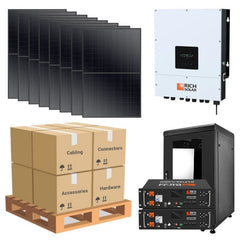
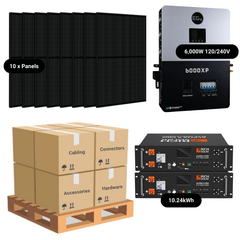
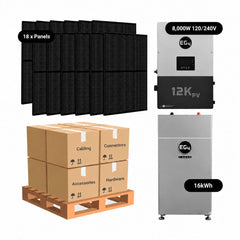
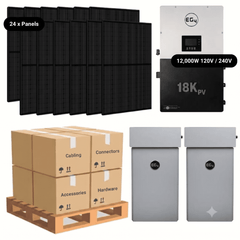
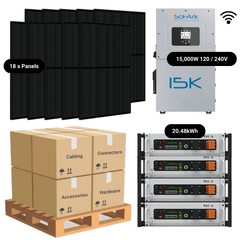
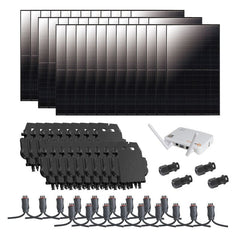
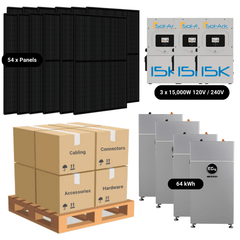
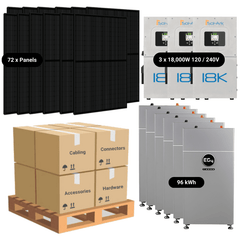
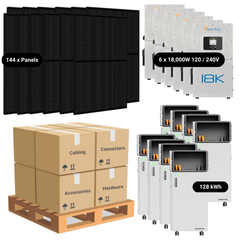
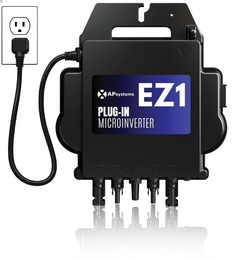
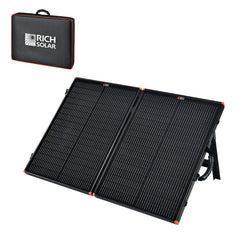
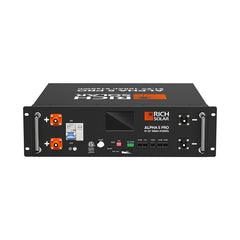
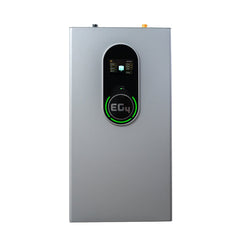
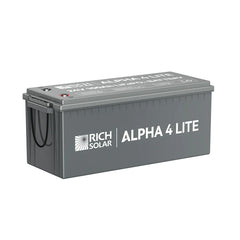
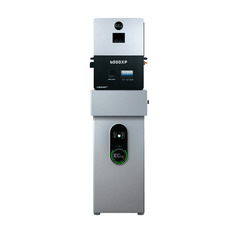
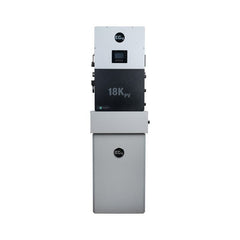
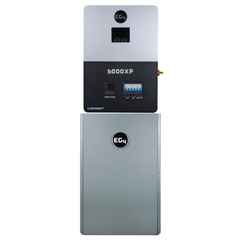
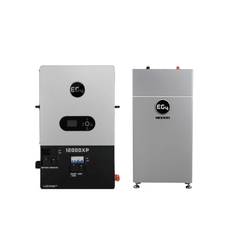
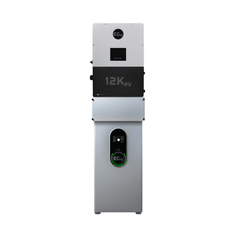
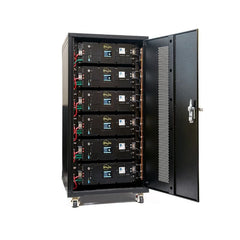
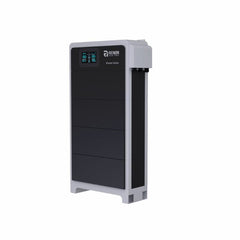
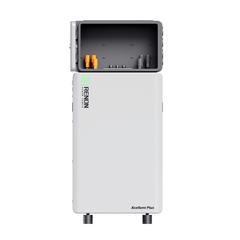
To trim the bill, VECTOR kits are grid-tied with no battery, built to offset as much as possible. To depend on the grid less, PRIME kits cover home backup, peak shaving and off-grid, and ELITE kits bring Sol-Ark inverters for whole-home autonomy. To skip it entirely, CORE kits are off-grid only, for places where a grid connection is impossible or impractical.
Not sure which? The Kit Finder will match one to your home, or request a free proposal.
The Bottom Line
Data centers aren’t a conspiracy or a crisis. They’re a huge new customer showing up faster than the grid can grow, and everyone on the system shares the adjustment. What it costs you depends on your region, and the forecasts will keep moving.
Power you make yourself doesn’t care what the forecast says.
Frequently Asked Questions
How much electricity do data centers use?
Roughly 4% to 6% of US electricity today. LBNL projects 9.5% to 15% by 2030, EPRI 9% to 17%, and BloombergNEF about 20% by 2035.
Are AI data centers raising my electric bill?
In some regions, yes, as one factor. In the PJM area, data center growth helped push up peak-demand forecasts and capacity prices, and the EIA ties price growth in parts of Texas to data center and crypto demand. Grid upgrades and fuel costs matter too.
What is NERC’s Level 3 alert?
The highest alert level NERC uses. In May 2026 it went out over large computing loads, after events where more than 1,000 MW dropped off the grid at once. It tells grid operators what to do. It isn’t a blackout prediction for your home.
Will data centers cause blackouts?
Nobody’s forecasting that. NERC’s worry is stability and planning, since huge loads can change fast. Whether it leads to outages depends on how regions plan and build.
How can I protect myself from rising grid costs?
Make some of your own power. VECTOR offsets your bill, and PRIME or ELITE add a battery for backup. The Solar Calculators can estimate it for your home.
Data referenced from Reuters via The Spokesman-Review, the EIA Short-Term Energy Outlook, E&E News, Data Center Knowledge, Bloomberg Law, MarketScale, Morgan Lewis, and APPA.
This article is for informational purposes only. Forecasts for data center demand vary widely and change often. Consult a qualified solar professional for advice specific to your property.


Customer Spotlight
How One Homeowner Cut His Electric Bill by 75% With a Shop Solar Kit


