


How Many Days of Battery Backup Do You Actually Need?

TL;DR: For most households — whether you're building a grid-backup system or going fully off-grid — 2-3 days of autonomy is the right starting point. More if you're in a high-outage area, have medical equipment, or live in a northern climate with limited winter sun. Here's how to calculate the actual number for your situation, and which kit configurations hit common targets.
Battery storage is one of the more significant costs in a solar system. Undersize it and you're scrambling during a three-day storm. Overbuy and you've paid for storage that sits unused while the sun is shining.
The answer depends on your situation — but there are practical frameworks that cut through the confusion.
What "Days of Autonomy" Actually Means
Days of autonomy is how long your battery can power your essential loads without any solar input at all. No sun. Nothing coming in. Just what's stored.
The operative word is "essential." These calculations aren't built around running your whole house at full tilt — they're built around a managed load. Refrigerator, freezer, some lighting, medical equipment, water pump, communication devices. The things you genuinely can't go without.
A typical household running essentials in a managed grid-down scenario uses somewhere between 5 and 15 kWh per day. That's significantly less than the 30 kWh national average for a normally running home — because you're being intentional about what you run and when.
How Many Days Do Most People Actually Need?
For most households, 2-3 days. Here's the logic.
The vast majority of grid outages resolve within 24 hours. Extended outages from major weather events — hurricanes, winter storms, ice events — typically resolve within 3-7 days. With 2-3 days of storage and whatever solar production occurs during that time, you handle most real-world scenarios without running dry.
The cases that push the number higher:
High-outage areas. If you're on the hurricane coast, in a wildfire region, or in an area that regularly sees 4-7 day outages from winter ice, size for what actually happens in your area.
Medical equipment. CPAP machines, oxygen concentrators, refrigerated medications — if anyone in your household depends on powered medical equipment, add meaningful buffer. A 2-day system that runs short on day three during a storm is not an acceptable outcome.
Full off-grid, no grid backup. If you're cutting the utility connection entirely, your battery is your only buffer during extended low-sun periods. Winter months with limited daylight require more storage or generator integration.
Northern climates in winter. If you're in the northern US or Canada and want year-round self-sufficiency, size for January, not August. Your worst production month might deliver half the kWh your best month does.
The Solar Factor That Changes Everything
Here's what most people miss when thinking about backup days: during a daylight outage when the sun is shining, your panels are recharging the battery while you draw from it.
A 7.92kW system on a good summer day produces 30-40kWh. If you're running 10kWh of essentials, you're net positive by 20-30kWh. Your battery ends the day more full than it started.
Days of autonomy is a worst-case number — what happens with zero solar input. During a sunny outage, your effective autonomy is considerably longer. The scenario where zero-sun autonomy really matters is extended cloudy periods, winter low-production months, or situations where panels are damaged.
This is why 2-3 days of storage feels like the right target for most people: it covers multi-day overcast without oversizing dramatically.
Running the Math for Your Situation
The calculation is straightforward:
- Estimate your essential daily load in kWh (refrigerator ~2kWh, freezer ~1.5kWh, lighting ~1kWh, water pump ~0.5kWh, devices ~1kWh = roughly 6-8kWh for basic essentials)
- Multiply by your target days of autonomy
- Divide by 0.8 — lithium batteries are rated at 80% depth of discharge, so you need more total capacity than usable capacity
Example: 10 kWh/day essential load × 3 days = 30 kWh usable. 30 ÷ 0.8 = 37.5 kWh total rated capacity needed.
ShopSolar's free Solar Calculators let you work through this based on your actual loads and location rather than estimates.
Which Kit Configurations Hit Common Targets
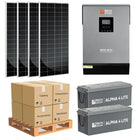
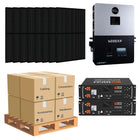
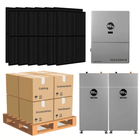
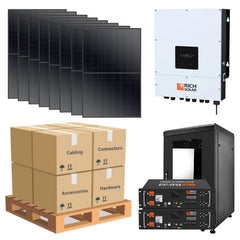
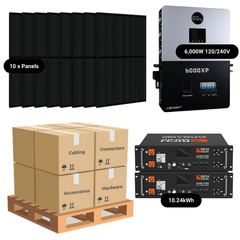
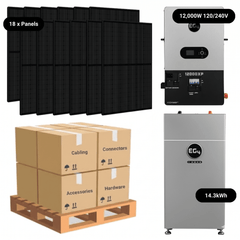
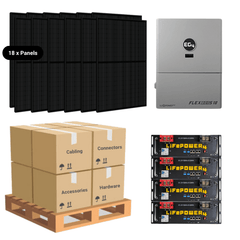
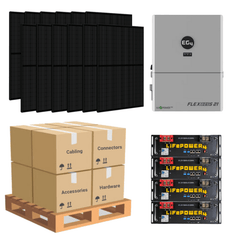
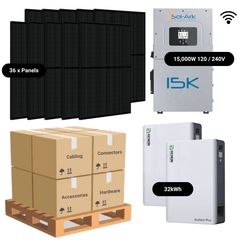
For 2-3 days at 5-10 kWh/day essential load: The PRIME Max (15-16kWh battery) covers the lower end. The PRIME Pro (28-32kWh) handles higher loads or more days. Most households land here.
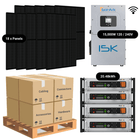
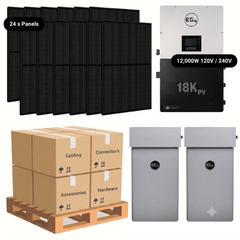
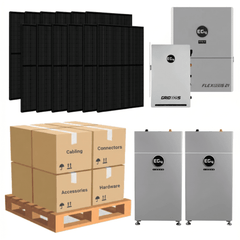
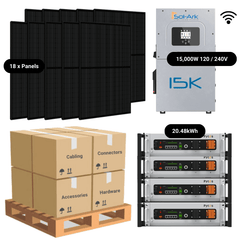
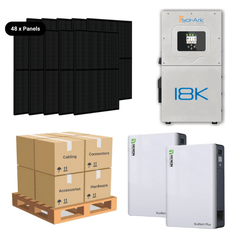
For 3+ days or higher essential loads: The ELITE Max (28-32kWh) and ELITE Pro (28-40kWh) are the right configurations. The Sol-Ark inverters in ELITE kits also handle generator integration automatically — when the battery drops below your set threshold during extended cloudy periods, the system brings a backup generator online without any intervention.
For smaller setups, cabins, or lower essential loads: The PRIME Plus (10-16kWh) covers genuine essentials for a smaller footprint. CORE kits (5-10kWh) work well for outbuildings, cabins, and setups where total load is modest.
Not sure what applies to your situation? The free proposal process includes a storage sizing recommendation based on your actual usage and location.
The Bottom Line
2-3 days of autonomy is where most people land, and for good reason. It covers the realistic outage scenarios most households face, while leaving room for solar production to extend that window considerably during sunny conditions.
Where to push higher: medical equipment, high-outage areas, full off-grid in northern climates, or anywhere that losing power for 5+ days is a real possibility rather than an edge case.
The right answer is specific to your loads, your location, and what you're willing to manage. Start with the calculators or the free proposal — either way, you'll have a real number in hand before you buy anything.
Frequently Asked Questions
How many days of battery backup do I need for my solar system? For most households using solar for grid backup or off-grid living, 2-3 days of autonomy on essential loads is the practical starting point. Essential loads typically run 5-15 kWh per day when managed carefully — significantly less than normal home consumption. If you're in a high-outage area, have medical equipment, or want full off-grid resilience through northern winters, push toward 3-5 days. ShopSolar's Solar Calculators can help size this based on your actual consumption.
How is days of battery backup calculated? Multiply your essential daily load (in kWh) by your target days of autonomy, then divide by 0.8 to account for lithium's depth of discharge limit. For example: 10 kWh/day essential load × 3 days = 30 kWh usable, divided by 0.8 = 37.5 kWh total rated capacity needed. This is the minimum rated battery capacity that gives you 3 days at that load level.
Does solar production extend my battery backup time? Yes, significantly. During a daylight outage, your panels continue recharging the battery while you draw from it. A well-sized solar system often produces more than your essential daily load on a sunny day — meaning your battery level can actually rise during the day even while you're using power. Days of autonomy is a worst-case number for periods with no sun at all.
What battery storage do PRIME kits come with? PRIME Plus comes with 10-16kWh of lithium battery storage, PRIME Max with 15-16kWh, and PRIME Pro with 28-32kWh. The PRIME Pro configuration is the most popular choice for households wanting 2-3 days of meaningful backup at higher essential load levels. See individual PRIME product pages for current configurations.
What if I need more than 3 days of backup? For extended autonomy requirements — medical equipment, high-outage areas, full off-grid in northern climates — look at the ELITE line, which offers up to 28-40kWh of battery storage and Sol-Ark inverters that automatically integrate a backup generator when needed. Generator integration provides a practical unlimited extension of effective backup time, with the solar system covering most of the load and the generator running only when the battery drops during extended low-sun periods.
This article is for informational purposes only. Battery performance and backup duration vary based on load, temperature, battery age, and system configuration. Consult a qualified solar professional for recommendations specific to your installation.