


How to Go Completely Off-Grid with Solar: A Realistic Roadmap

TL;DR: Going fully off-grid is achievable for most homeowners — it just requires sizing the system around your actual usage and your worst solar month, not your average. The path has five steps: know your consumption, understand your sun, size your panels and storage, choose the right kit, and plan for your worst case. We walk through all of it here. And yes, the numbers are real.
Step 1: Understand What "Off-Grid" Actually Means
Off-grid means your home produces and stores its own electricity with no utility connection. You're not buying power from anyone. Not selling it back. Just running on what you generate.
That's meaningfully different from "grid-tied with battery backup," where your system can lean on the utility when it chooses to. Off-grid requires specific equipment designed to operate independently — and it requires sizing for self-sufficiency, not just savings.
The practical implication: your system has to cover your annual energy use from the sun alone, with enough storage to carry you through nights and cloudy periods. In most of the continental US, that's achievable. The question is sizing it correctly.
Step 2: Know Your Energy Use Before You Buy Anything
Pull your electricity bills from the last 12 months. Most utility bills show monthly kWh consumption. Add them up, divide by 12 for a monthly average, then divide by 30 for a daily number.
The national average is about 30 kWh per day, but that varies a lot. An efficient home might use 10-15 kWh daily. A larger home with electric heat, a hot tub, and an EV can hit 60+ kWh. The system size you need scales directly with this number.
Before committing to a system, it's worth asking: which loads are truly non-negotiable, and which could change? Switching from electric resistance heat to a mini split, for example, cuts heating energy use by 60-70%. That kind of switch meaningfully shrinks the system you need — and the cost that comes with it. ShopSolar carries solar mini splits and off-grid refrigerators specifically designed for efficiency in these setups.
Step 3: Understand Your Solar Resource
Solar production depends on where you live and how your panels are oriented. The technical measure is "peak sun hours" — the equivalent daily hours of full-sun intensity. The US ranges from roughly 3.5 peak sun hours in the Pacific Northwest to 6+ in the Southwest desert.
Your worst month matters more than your average. If you're designing for true off-grid living, you need to handle January, not just August. NREL's free PVWatts calculator lets you look up estimated monthly solar production for any US location — it takes about two minutes and will show you exactly what your worst production month looks like.
Step 4: Size Your System
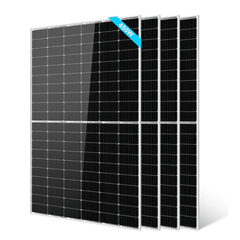
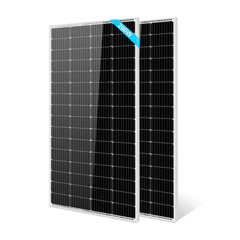
The basic math for panels: divide your daily kWh consumption by your peak sun hours to get the minimum kW of solar you need. If you use 20 kWh/day and get 4.5 peak sun hours, that's about 4.4 kW of panels as a floor — before accounting for system losses, which typically run 15-25%. In practice, you'd want 5-6 kW for that consumption level.
Battery sizing is a separate calculation. A common target is 2-3 days of autonomy — enough storage to run essentials without any solar input. At 20 kWh/day, that's 40-60 kWh of usable storage. Since lithium batteries are typically rated at 80% depth of discharge, you'd need about 50-75 kWh of total rated capacity.
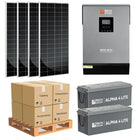
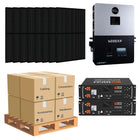
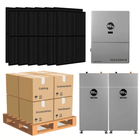
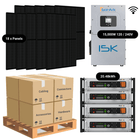
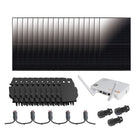
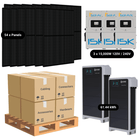
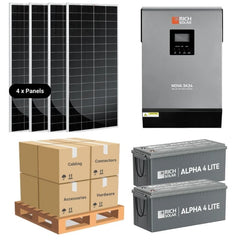
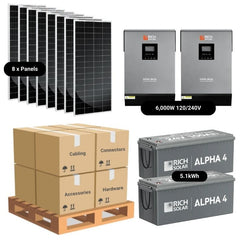
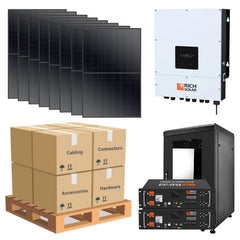
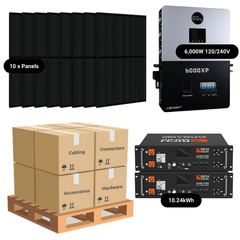
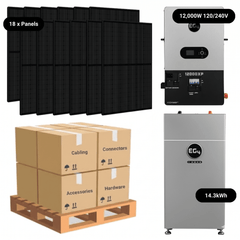
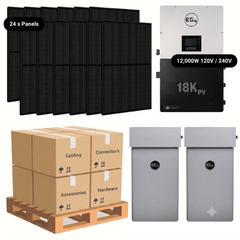
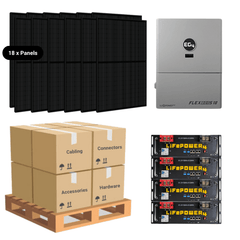
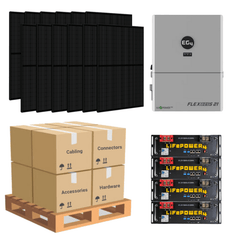
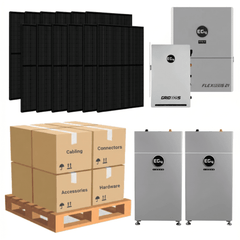
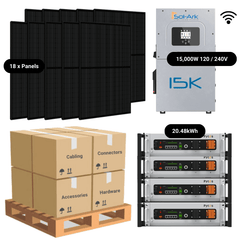
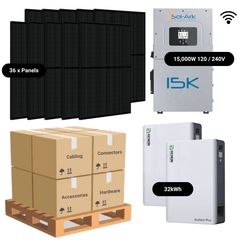
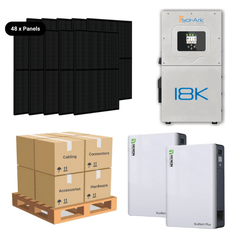
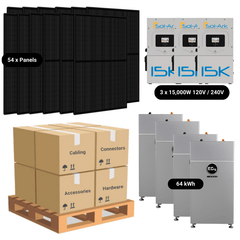
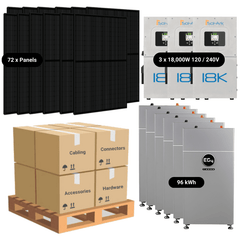
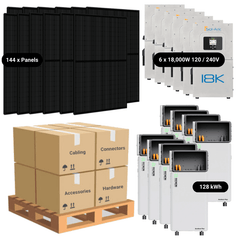
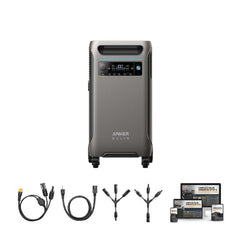
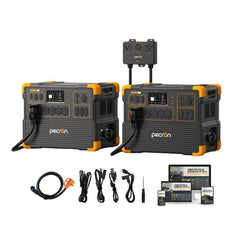
For most households going fully off-grid, this points toward the PRIME Max or PRIME Pro at a minimum — or the ELITE line for larger homes or those wanting more autonomy and generator integration. Our free Solar Calculators let you run these numbers based on your actual consumption.
Step 5: Choose Your Mounting Approach
Panels need to face the sun, and how you mount them matters more in an off-grid setup than in a grid-tied one — because every percentage point of production matters when you're self-sufficient.
Roof mounts are the most common, but they're constrained by your roof geometry, angle, and orientation.
Ground mounts give you full control. You can orient them due south at the ideal angle for your latitude, away from shade, and access them easily for maintenance. For off-grid homesteads, ground mounts are often the preferred choice precisely because they're not limited by the house.
Pole mounts work well for remote locations where you want panels at a specific spot — near an outbuilding, away from trees, or on elevated ground to maximize sun exposure.
Step 6: Plan for Your Worst Case
True off-grid resilience means thinking through what happens during your worst solar month at your highest-consumption time.
Three approaches, not mutually exclusive:
Right-size the system. Build enough panel and storage capacity to handle the worst month without any backup. More upfront cost, simplest to operate.
Add generator integration. ELITE kits with Sol-Ark inverters manage this automatically — they bring a backup generator online when the battery drops below a set threshold, then return to solar when conditions improve. You burn some fuel in winter, but the solar system carries the load the rest of the year.
Manage consumption seasonally. Running the dishwasher at noon, avoiding high-draw appliances during cloudy stretches, shifting laundry to peak sun hours. This is less of a lifestyle change than it sounds once you know your system.
What This Actually Costs
True off-grid systems cost more than grid-tied systems because they need substantially more battery storage. A mid-sized off-grid system for a moderate-consumption home typically runs from $15,000 to $35,000+ for equipment, depending on how much solar and storage you need.
It also compares differently depending on your situation — if you're building on a remote property where grid connection would cost $20,000-$50,000 in line extension fees, solar is often the cheaper option, not just the independent one.
See individual product pages for current pricing. ShopSolar also offers financing through Affirm.
The Bottom Line
The path to full energy independence is real and achievable. The key is sizing the system around your actual situation — your consumption, your solar resource, and your worst month — rather than averages or best-case assumptions.
Frequently Asked Questions
What does it actually take to go completely off-grid with solar? Three things: enough solar panels to produce what you consume annually, enough battery storage to carry you through nights and cloudy periods, and an inverter capable of operating without grid connection. Most full off-grid builds in the continental US use somewhere between 5-15kW of solar and 20-50kWh of battery storage, depending on consumption. ShopSolar's PRIME and ELITE kit lines are designed for this application.
How do I know what size solar system I need to go off-grid? Start with your daily kWh consumption from your electricity bills, then divide by your location's peak sun hours to get a minimum panel wattage. Add 15-25% for system losses. For storage, multiply your essential daily load by 2-3 days of autonomy, then divide by 0.8 for lithium's depth of discharge limit. ShopSolar's free Solar Calculators walk through this math based on your actual numbers.
How much battery storage do I need to go off-grid? A common target is 2-3 days of autonomy on essential loads, which for an average household means 20-50kWh of total rated storage. The right number depends on your consumption, your location's worst solar month, and whether you plan to integrate a backup generator. Northern climates or households without generator backup should size toward the higher end. The free proposal process includes a storage sizing recommendation specific to your situation.
Is going off-grid with solar worth it? For most households on remote properties, or those with high utility costs and strong preparedness motivations, yes. The economics are strongest where grid connection costs are high, utility rates are high, or where energy independence has non-financial value. For urban and suburban homeowners who simply want to cut their bill, a grid-tied system often has better pure-financial payback — though it doesn't provide the independence off-grid does.
Can I add solar to an existing off-grid property? Yes. ShopSolar's kits ship complete with everything needed for a DIY installation — panels, inverter, batteries, cabling, and mounting hardware. Most customers handle the majority of the installation themselves using ShopSolar's provided schematics, and bring in a local electrician for final connections. The free proposal process includes a review of your existing setup and a recommendation for what's needed to complete the system.
This article is for informational purposes only and does not constitute financial or installation advice. System performance varies based on location, usage, installation quality, and local conditions. Consult a qualified solar professional for advice specific to your installation.