


Solar Terms Explained: Your Easy Guide to DIY Solar Lingo

If you’ve ever started researching solar, you know how quickly you can get buried in a pile of technical terms. MPPT, AGM, inverter capacity—it feels like learning a new language.
Good news: you don’t need an engineering degree to understand your solar system.
Below is your plain English cheat sheet for the most common (and confusing) solar terms.
Bookmark this page—your future self will thank you.
Solar Panel Terms
Photovoltaic (PV)
Fancy word for “solar panel.”
It simply means converting sunlight into electricity.
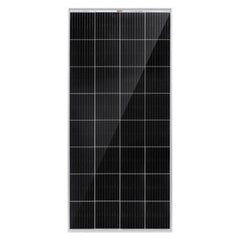
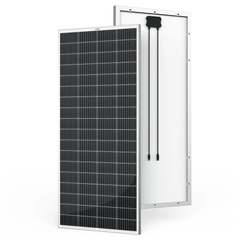
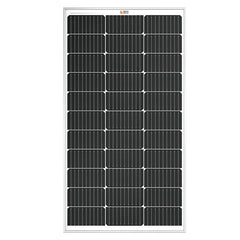
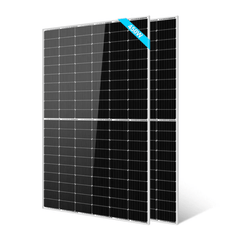
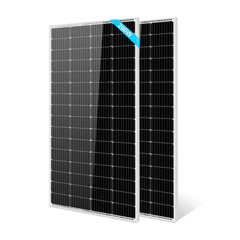
Monocrystalline
A type of solar panel made from a single crystal structure.
Translation: More efficient, usually darker black, and takes up less space than polycrystalline.
Polycrystalline
Panels made from multiple silicon crystals.
Translation: Slightly less efficient but often more affordable.
Watt (W)
A unit of power.
Translation: How much electricity something is using or producing right now.
Watt-Hour (Wh)
A unit of energy over time.
Translation: If a device uses 1 watt for 1 hour, that’s 1 watt-hour.
Kilowatt-Hour (kWh)
1,000 watt-hours.
Translation: This is what your utility bill measures. If you run a 1,000-watt appliance for 1 hour, that’s 1 kWh.
Battery Terms
Battery Bank
All your batteries working together as a single unit.
AGM Battery
Absorbent Glass Mat battery—sealed, low-maintenance lead-acid battery.
Translation: Reliable and spill-proof, great for backup systems.
Lithium Iron Phosphate (LiFePO4)
A type of lithium battery with long life and stability.
Translation: More expensive upfront but lasts years longer than lead-acid.
Depth of Discharge (DoD)
How much you can safely drain a battery.
Translation: Draining a battery fully shortens its life. For example, lead-acid batteries shouldn’t be discharged below 50%.
State of Charge (SoC)
How full your battery is, expressed as a percentage.
Charge & Inverter Terms
Charge Controller
Device that manages power flowing from your solar panels into your batteries.
Translation: Prevents overcharging and keeps batteries healthy.
MPPT (Maximum Power Point Tracking)
A smart charge controller that optimizes the voltage and current from your solar panels.
Translation: Squeezes the most power possible out of your panels.
PWM (Pulse Width Modulation)
An older type of charge controller.
Translation: Simple and cheaper but less efficient than MPPT.
Inverter
Device that converts DC (battery) power into AC (the type your home uses).
Translation: Without an inverter, you can’t run standard appliances.
Pure Sine Wave Inverter
Produces clean, smooth AC power.
Translation: Best for sensitive electronics.
Modified Sine Wave Inverter
Produces a rougher version of AC power.
Translation: Cheaper but can cause issues with certain devices.
System Sizing & Power Flow Terms
Array
Your group of solar panels wired together.
Load
Any device using power.
Translation: Your appliances, lights, and tools.
Surge Capacity
The extra power your inverter can handle for a few seconds to start big appliances.
Translation: Needed for things like refrigerators or pumps that draw more power when they first turn on.
Cycle
One complete charge and discharge of a battery.
Translation: Most batteries have a rated number of cycles before capacity fades.
Grid-Tied
Connected to your local utility grid.
Translation: You can sell excess power back or draw from the grid when needed.
Off-Grid
Completely independent from the utility grid.
Translation: You rely on your batteries and backup sources.
The Bottom Line
Solar doesn’t have to be confusing.
When you break down the jargon, you’ll feel way more confident planning and managing your system.
Still have questions? We love helping you cut through the noise.